
'Please don't celebrate me if you are not going to listen to my voice.'

Some areas in the Indo-Gangetic basin in India have already passed the groundwater depletion tipping point and its entire northwestern region is predicted to experience critically low groundwater availability by 2025, according to a new report by the United Nations.

The climate conference on Saturday came out with an ambitious final draft that will commit USD 100 billion a year from 2020 to help developing countries.

Prime Minister Narendra Modi has said that the Quad is not against anyone, but for a rules-based international order and respect for sovereignty, in a veiled reference to China.

Ahead of this election, the alliance between the BJP and the SKM had broken down. One reason is the fear that like Article 370, Article 371F might also be changed.
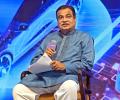
'I am not an aspiration-oriented politician.' 'This is the time to redefine politics.' 'Politics of power is not real politics.'

As weather patterns grow more unpredictable due to climate crisis, India is taking a giant leap with "Mission Mausam" to improve weather understanding and forecasting through expanded observation networks, better modeling and advanced tools like AI and machine learning.

The TIME 100 AI list is an interesting assortment of titans. Indians make up about 20 per cent of the coveted list, which is pretty commendable, notes Sandeep Goyal.

He said that as compared to global models costing 2.5 to 3 US dollars per hour usage, India's AI model will cost less than less than Rs 100 per hour (1.16 US dollars per hour) after 40 percent government subsidy.
India needs to recognise and address challenges posed by its dependence on China for critical minerals and examine the implications of phasing down coal on bank balance sheets as it accelerates its green transition, the government's Economic Survey 2023-24 tabled in Parliament on Monday said. As part of its national plan to contribute to meeting the global goal of limiting the average temperature rise to 1.5 degrees Celsius, India has committed to reducing emissions by 45 per cent below 2005 levels by 2030, achieving 50 per cent cumulative electric installed capacity from non-fossil fuel-based energy resources, and creating a carbon sink of 2.5 to 3 gigatons of CO2 equivalent through additional forest and tree cover.

A fracture of interstate relations could be India's biggest risk coming out of the pandemic. This topped a list of critical risks for India over the next two years, according to Geneva-based World Economic Forum's Executive Opinion Survey (EOS), whose results were released on Tuesday. Other top risks include a debt crisis in large economies, widespread youth disillusionment, failure of technology governance and digital inequality.

"This warming trend is alarming," said NASA Administrator Bill Nelson.

Funds will invest in new technology companies involved with climate change mitigation.

Modi is among the first set of speakers at the Summit's opening ceremony, a highly significant gesture given that only those heads of state, government and ministers are invited to speak at the summit who will have any "positive development" to announce on climate action.
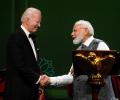
United States President Joe Biden will travel to India from September 7 to 10 to attend the G-20 Leaders' Summit during which he will discuss with other leaders a range of global challenges, including the Ukraine conflict, the White House announced on Tuesday.

'One of the big findings is that younger men seem to have shifted towards the Republican Party.' 'In 2020, about 23% of younger men said they would vote Trump.' 'Now that number is 48%.' 'It is like a 25 point shift, and you don't actually see shifts that big in surveys.'

The analysis revealed abrupt changes in temperatures occurring in late winter across north India.

Spurs, Liverpool top eco-friendly table

Temperatures in 17 locations breached 45 degrees Celsius on Monday, with the punishing heat affecting health and livelihoods.

If all goes on well, the NISAR satellite will be launched in 2021 from India using the Geo-synchronous Satellite Launch Vehicle (GSLV).

Despite Prime Minister Narendra Modi's tall claims that no one has served nature more than India, some of the steps taken by his BJP government proves that the ground reality is exactly opposite, says Devanik Saha.

The world is in a state of crisis and it is difficult to predict how long this state of instability will last, Prime Minister Narendra Modi said on Thursday referring to various global challenges arising out of conflict, war and terrorism among others. In his opening remarks at the Voice of Global South virtual summit, Modi flagged concerns over rising prices of food, fuel and fertilisers, economic impact of the COVID-19 pandemic as well as natural disasters driven by climate change. "We are meeting as a new year dawns and brings new hopes and new energy," Modi said.

'While every year presents new challenges, it also provides opportunities for better growth and performance.'

Mayur Sanap lists five films at MAMI 2024 that took his breath away.

'It will be important strategically and geographically because there is no port in India which is as close to the international shipping route as Vizhinjam.'

The 'Civil Society Report on Climate Change' prepared by the Civil Society Coalition on Climate Change -- a conglomerate of 40 scientific think-tanks from as many countries, including the US, the UK and Italy -- that was released today clearly says that 'cutting greenhouse gas emissions in the coming two decades is not a cost-effective way to address climate change". The report was released by deputy chairperson of the Planning Commission, Montek Singh Ahluwalia.

At the summit, the US is able to play the role of a bully.

The 54-page Paris agreement draft had been scaled down to 50.

ISRO made efforts to re-establish communication with rover Pragyan and lander Vikram after they were put into sleep mode in September following the onset of night on the moon.

The warmest six years have all been since 2015, with 2016, 2019 and 2020 being the top three. The differences in average global temperatures among the three warmest years are indistinguishably small. The average global temperature in 2020 was about 14.9C, 1.2 ( 0.1) C above the pre-industrial (1850-1900) level.

Prime Minister Narendra Modi said a climate deal between the United States and China does not put pressure on India, but that global warming itself was reason to take action.
Climate change can adversely impact the production of crops like wheat, rice and pulses in India and the government needs to educate farmers in this regard, Nobel Laureate and Inter-governmental Panel on Climate Change Chairman R K Pachauri said.

'We know our glaciers are melting very rapidly.' Dr R K Pachauri, Chairman, Intergovernmental Panel on Climate Change, outlines the implications for India.

'Urbanisation results in heavy rainfall events.'

'I am not a mother and never had an abortion either, so I had to understand motherhood and child loss from anecdotal experiences of others.'
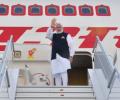
New initiatives to boost cooperation to ensure stability in the Indo-Pacific, ways to find peaceful solutions to the conflicts in Ukraine and Gaza and addressing concerns of the global South will be the focus of Prime Minister Narendra Modi's three-day visit to the US beginning Saturday.

As a politician, Yadav is amiable and a consensus-maker, not hamstrung by dogma.

The unrelenting heatwave sweeping large parts of the country has claimed at least 110 lives and left over 40,000 people grappling with suspected heatstroke between March 1 and June 18 this year, health ministry sources said on Thursday.
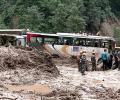
Hundreds of people are facing a shortage of food, safe drinking water and sanitation in Kathmandu following the natural disaster, according to eyewitnesses.

India must be prepared to deal with climate disasters, geopolitical confrontations, and social strife linked to global events, asserts Jayant Sinha, chairman of Parliament's Standing Committee on Finance.
